-
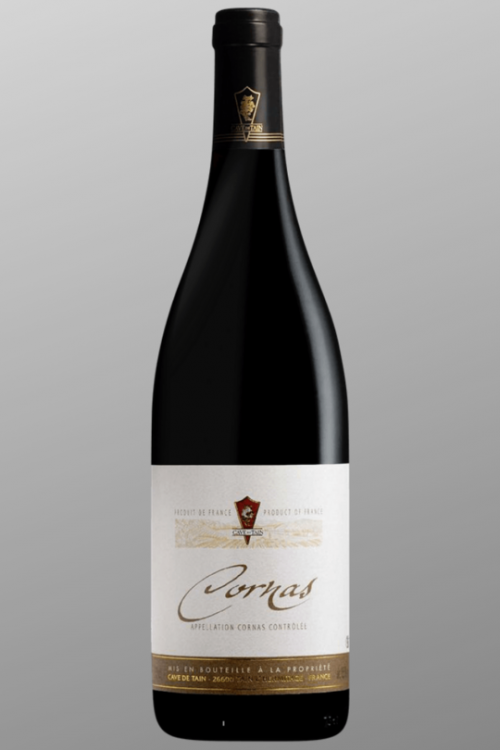 WHAT THE CRITICS ARE SAYING "The medium to full-bodied 2016 Cornas Grand Classique is supple, plush and easy to drink. Plum, cola and spice notes appear on the nose and persist across the palate onto the soft, open-knit finish." Joe Czerwinski, The Wine Advocate OUR NOTES At the foot of the famous Hermitage hillside, the Cave de Tain l'Hermitage cooperative produces five appellation controlee wines, namely Hermitage, Crozes-Hermitage, St-Joseph, Cornas and St-Péray. Cave de Tain also owns a 21-hectare domaine within the prestigious Hermitage appellation. The Cave has established an enviable reputation for authentic wines bearing the full character of their individual terroirs, bringing out the best through careful and non-intrusive vinification methods. Speaking at the inauguration of the new cellars, Jancis Robinson said "Cave de Tain has always been managed with a true passion for the production of quality wines and extensive consumer insight. It is one of the best cooperative wineries in France, but also one of the best producers of northern Côtes-du-Rhône wines." TECHNICAL SHEET From: France, Northern Rhone, Cornas Colour: Red Maturity: Early Variety: Syrah
 -
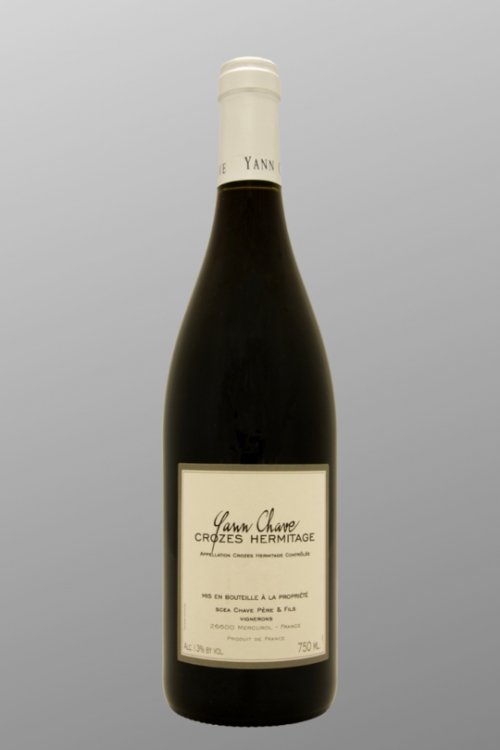 WHAT THE WINEMAKERS ARE SAYING “Located on the land of Beaume and Péléat, my Hermitage vines, dutifully and lovingly tended, are over 40 years old and are rooted in a soil of loess. South-West facing, the plots enjoy abundant sunshine throughout the vegetative cycle, thus providing grapes with the raw material I require to bottle the much sought-after DNA of this mythical Hermitage hillside.”Yann Chave OUR NOTES The adventure all began with Yann’s parents. They decided to settle in the area, on a four-hectare site, at the beginning of the 70s: one hectare of vineyards, and the rest, fruit orchards. They continued to extend the estate while maintaining the dual crop system, so common at the time. Their first harvests were sold to local merchants, and from 1973 onwards, they began to make their own wine before joining the Tain Cooperative Winery until 1978. The following year, Nicole and Bernard Chave created their own private winery. In 1996, Yann was 26 years old. With a postgraduate diploma in Auditing and Management Control, and free of military service obligations, he decided to work on the wine-growing part of the estate. With tender attachment to his vineyard, he restructured the vines and began to work on the soil. After being victim of poisoning by an insecticide he was using to treat the vines, he began seeking alternative solutions, engaging with organic agriculture at the dawn of the year 2000. The estate was certified in 2007. Today, located at the heart of Crozes-Hermitage appellation, the estate extends to 20 hectares, with 1.2 hectares on the mythical Hermitage hillside. Tasting notes Colour: bright colour, purple with a violet hue. Nose: discreet nose requiring aeration. Aromas develop with finesse and much complexity; blackberry jam, liquorice sticks, a hint of roasting and spice. Palate: full and generous on the palate. Mid-palate reveals rich aromas of ripe fruit and a hint of smokiness. Tannins are dense and intense, but with great finesse, giving the wine imposing structure and a long finish. A truly superb wine. Pairing: Roast duck breast fillet, creamy polenta, Grilled Mezenc rib steak with truffled mashed potatoes, Creamy Brillât Savarin or Chaource cheese. Maturing: Decant if to be drunk immediately. It may be laid down for 10 to 15 years. Many thanks to Christophe SANTOS, professor of wine waiting at the Hermitage Hotel School, and to his students. Vinification: After 100% destemming, vinification is as gentle as possible: gentle pressing is not performed, twice-daily pumping over is preferred, with vinification temperatures of under 28°C. After de-vatting, wine is placed in new and one-year-old demi-muids. Malolactic fermentation takes place in these barrels, and wine is kept here for 12 months. After this maturing phase, the wine will then spend 6 months in a vat to decant naturally prior to bottling.
 -
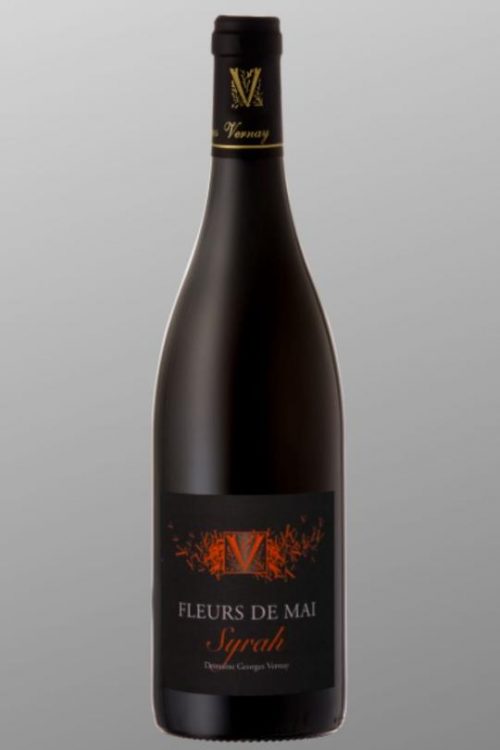 WHAT THE CRITICS ARE SAYINGWine Person of the Year 2012: Christine Vernay. Producer of exceptional wines, the absolute pinnacle of quality in France and in the world. Bettane and Desseauve, Le Grand Guide des Vins de France 2012 This cuvée comes from mature Syrah vines and offers a degustation very close to that of a Côte-Rôtie. It derives its name “Fleurs de Mai” ‘May Flowers’ from the May Flower peach trees that were long ago found planted on the plot. A wine of deep fragrances, those of black cherries and pepper, game and spices all wrapped around a supple texture. Ripe, fresh and persistant, it is remarkably well balancedwine produced in small, limited quantities.OUR NOTESFar removed from the plump, languid Viogniers from less unique terroirs, Domaine Georges Vernay’s three Condrieu, remain quite unlike any other wine produced in the world. Made from tiny yields on incredibly steep granite terraces, they are not cheap, but then nor should they be. They come from one of the most challenging – and expensive to manage – vineyard areas in the world, and they are benchmark examples. In the firmament of great white wine, these are counted amongst the very best. Befitting the civility and studious nature of this Domaine, it is appropriate that their measured evolution from a great grower in the Northern Rhône into one of the greatest growers in France has been understated. At Domaine Georges Vernay, authenticity comes in the form of old vines, low yields and the mantra of ‘minimal intervention’. We could fill pages with the recent critical success that winemaker Christine Vernay and her wines have achieved over the past few years. This is actually quite scary considering that even a few years back it didn’t seem possible for their wines to get much better. And yet, that is exactly what has happened. Christine Vernay’s received the “Wine Person of the Year 2012” award from the two leading French wine critics, Michel Bettane and Thierry Desseauve. In their new guide, 2012 Le Grand Guide des Vins de France, Vernay was elevated to the top “5 Star” rating. Vernay joins a clique of only 30 French Estates - that includes Domaine de la Romanee Conti, Ausone, Latour, Margaux, Lafite Rothschild and Yquem. It’s also worth noting that Vernay probably is the most artisanal of these and is also one of the few family-owned Domaines in this class. It’s an incredible achievement, yet for those insiders familiar with the wines, it’s an achievement that will not surprise. There are two prestigious Condrieu cuvees, Côteau de Vernon and Les Chaillées de l’Enfer. The ‘normal’ cuvée is known as “Les Terrasses de l’Empire”. Today, the two Côte Rôties produced - la Blonde du Seigneur and Maison Rouge - are also regarded as some of the finest in the region. There is some great value to be had from the le Pied de Samson Viognier and the Georges Vernay Syrah.TECHNICAL SHEETCountry: France Region: Rhone Valley Appellation: IGP Collines Rhodaniennes Producer: Christine Vernay Grape: 100% Syrah Age of the vines: 50 years Vineyard: Mature vines planted on the plateau adjacent to the Condrieu appellation Aging: 8 months in oak vats Total Production: 6,000 bottles
 -
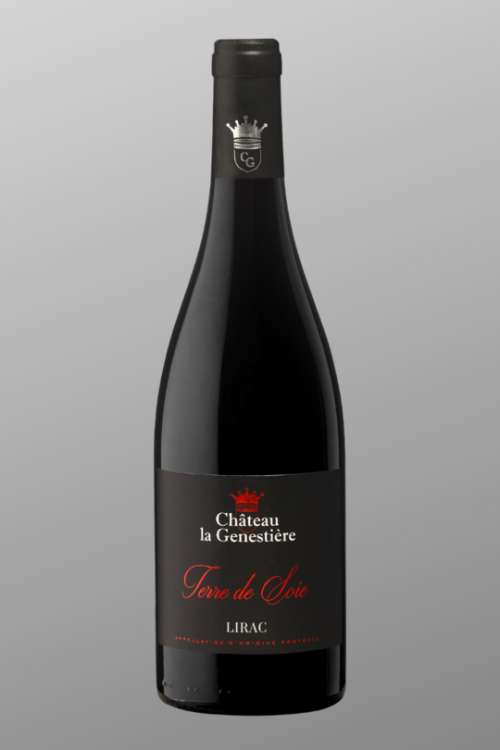 WHAT THE WINEMAKERS ARE SAYING “The color is deep red with purplish reflections; the purple disc marks the youth of this wine. On the nose, the first aromas are vanilla, roasted, cocoa and after aeration reveal notes of ripe fruit. On the palate, the attack is delicate with melted tannins and reveals aromas of cassis and crushed blackberries. The finish is peppery, spicy with a touch of vanilla with an exceptional length which suggests a great aging potential.” Chateau La Genestiere OUR NOTES Château la Genestière is the living memory of the history of Avignon. During the 16th century, the estate was a silk workshop. The basin, that used to feed the mill to weave silk, still exists today. Spanish broom was grown to produce silk. During the 18th century, no less than 15 000 people worked in the silk industry in Avignon, France being in those days the world’s leading silk exporter. Wine production at la Genestière only began in 1930, after the decline of the silk industry. In 1994 Jean-Claude and Raphaël Garcin purchased the estate, which already had a great reputation in France and abroad. Throughout the years, with lots of work, perseverance and skill, they grew the estate by adding Domaines Saint-Anthelme, Les Ramières and Longval, to cover the greatest areas of the Southern Rhône: Tavel, Châteauneuf du Pape, Lirac and Côtes du Rhône. In 2015 Christian Latouche, who already owned two estates in the Baux de Provence, purchased the property to keep this fascinating story going. TECHNICAL SHEET Grape varieties: Grenache (50%), Syrah (30%), Mourvèdre (20%) Terroir: Limestone clay with spreading rolled pebbles. The terroir is sunny and swept by the mistral. Yield: 40 hectoliters per hectare. Vinification: Vinification with punching down and temperature control over a long vatting period. After selecting the best vintages by tasting, the final blend is aged in new barrels for one year. Food & Wine Pairing: It is served with game, wild boar, hare stew. Aging potential: Drink between 5 and 10 years and more.
 -
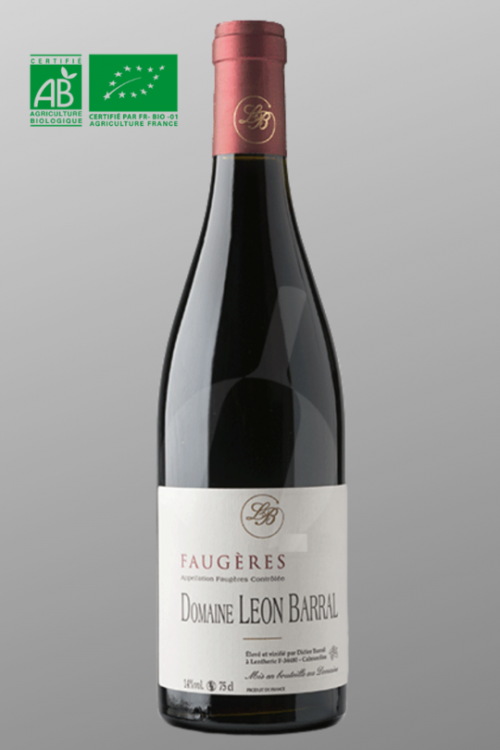 OUR NOTES Didier Barral represents the thirteenth generation to grow grapes in the tiny hamlet of Lenthéric, within the confines of the Faugères appellation deep in the heart of the Languedoc. Domaine Léon Barral is a beacon of revolutionary winegrowing: shortly after founding the domaine, Didier decided that biodynamic practices were the best choice for farming his thirty hectares of vineyards. Léon Barral has pioneered numerous innovative agronomic techniques with the goal of establishing his vineyards as a self-sustaining ecosystem. This Renaissance man, naturalist, and biodynamic maven commands tremendous respect among his peers for his visionary approach to topics like soil management, pest control, and drought mitigation in his vineyards. Incorporating biodynamic practices necessitates enormous investment and an uncompromising work ethic. With so much land to farm, it is fortunate that Didier has so much help. His workers of choice? A team of twenty cows, horses, and pigs that roam the vineyards during winter, grazing the cover crops while adding natural fertilizer to the soil. Without compacting the earth the way a tractor would, the animals effectively cultivate healthy microbial activity, bringing mushrooms, ants, ladybugs, earthworms, and other essential life forms, which add important nutrients while aerating the soil. This is the concept of sustainability at its finest, where the ecosystem thrives from the symbiotic relationships Didier has fostered amid the vines. TECHNICAL SHEET From: France, Languedoc-Roussillon, Faugeres Color: Red Maturity: Early Sweetness: Dry Variety: blend of 50% Carignan, 20% Cinsault and 30% Grenache
 -
Out of stock
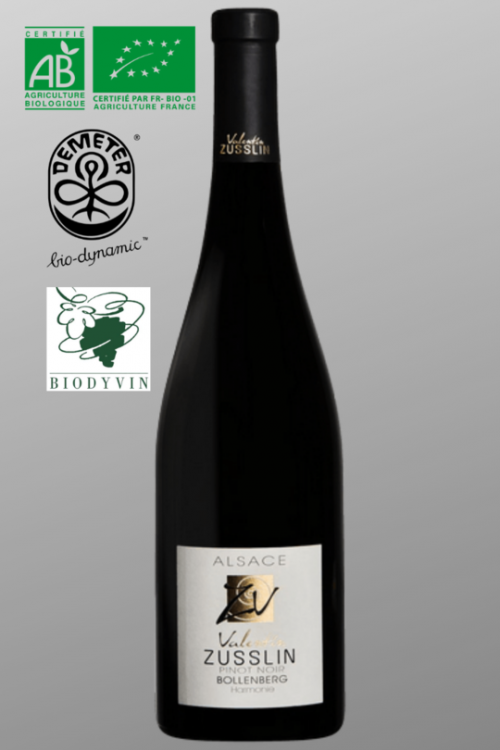 OUR NOTES Established in 1691 by M. Jodocus Cisle (former name of Zusslin), Domaine Valentin Zusslin is now run by two generations of the Zusslin family who are following in the footsteps of their forbears. The winery is based in Orschwihr, south of Colmar, and the vines are planted on the slopes of the Bollenberg, Clos Liebenberg and Grand Cru Pfingstberg. In 1997 the domaine converted to biodynamic viticulture. Much of the work in the vineyard and in the cellar is done by hand, in order that the grapes can express the full potential of the unique terroirs of the Domaine. TECHNICAL SHEET From: France, Alsace Colour: Red Maturity: Mature Sweetness: Dry Variety: Pinot Noir
 -
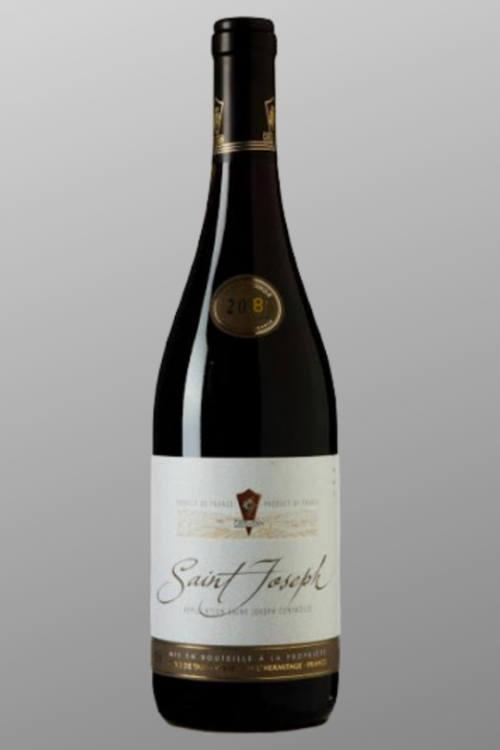 OUR NOTES At the foot of the famous Hermitage hillside, the Cave de Tain l'Hermitage cooperative produces five appellation contrôlée wines, namely Hermitage, Crozes-Hermitage, St-Joseph, Cornas and St-Péray. Cave de Tain also owns a 21-hectare domaine within the prestigious Hermitage appellation and the head winemaker, Xavier Frouin supervises each stage of vinification, from grape reception, classified according to quality, right up to bottling. The Cave has established an enviable reputation for authentic wines bearing the full character of their individual terroirs, bringing out the best through careful and non-intrusive vinification methods. As it has grown, traditional winemaking techniques have remained whilst benefitting from the latest developments in modern winemaking. Cave de Tain's new cellars were completed in late 2014; a total investment of €10m has dramatically reinvigorated winemaking facilities, increasing the Cave's quality potential without increasing production capacity. Speaking at the inauguration of the new cellars, Jancis Robinson said "Cave de Tain has always been managed with a true passion for the production of quality wines and extensive consumer insight. It is one of the best cooperative wineries in France, but also one of the best producers of northern Côtes-du-Rhône wines." TECHNICAL SHEET From: France, Rhône, Northern Rhône, Saint Joseph Color: Red Maturity: Early Sweetness: Dry Variety: Syrah
 -
 WHAT THE WINEMAKERS ARE SAYING “The technical team at Clos Saint-Vincent makes every effort to respect the terroir and produce the eponymous wine in the purest Bordeaux tradition. The slow maceration enables the preservation of the fruit flavours necessary for the harmony of wines matured in barrels. All of these precautions enhance the controlled balance of the wine, whose elegant palate reveals notes of red fruit, followed by black fruit and then silky tannins on the finish.” Clos Saint Vincent OUR NOTES The wines from Clos Saint- Vincent, in the Saint-Emilion Grand Cru appellation, offer a perfect example of the classic Bordeaux style: an exercise in balance, uniting the cardinal qualities of the wine in the expression of fruit and a hint of woodiness from barrel ageing. The property's 17 hectares present the tightly woven fabric of remarkable, uniform terroir. Entrusted to Saint Vincent, the patron saint of winegrowers, the tendency of the well-named Clos is to produce wines that represent the traditional Bordeaux style. Plot selection is particularly meticulous, given that some of the vines are more than 60 years old. TECHNICAL SHEET Appellation : Saint-Emilion Grand Cru Topography : Located just beneath the picturesque village of Saint Emilion, Clos Saint-Vincent has 17 hectares of vines. Surface of the vineyard: 17 ha Soil: Gravel-silica Grape varieties: 75% Merlot, 15% Cabernet Franc, 10% Cabernet Sauvignon Average age of the vines: 25 years Farming method: sustainable agriculture Average yields: 45 hl/ha Production: 83 000 bottles
 -
 WHAT THE CRITICS ARE SAYING “Aromas of red fruits, nice oak, very fleshy with its tannic structure, long and balanced palate on the finish thanks to the freshness. A tense wine, full of elegance and character.” Bettane & Desseauve OUR NOTES Dark red in colour, complex aromas of cedar with subtle hints of oak and ripe dark fruits. Well structured and balanced with fine grained tannins, round and fleshy on the palate, good persistence on the finish with the oak well integrated. The wine may be cellared for 10+ years depending on the vintage. Château Le Bruilleau is located south of Martillac in the southern part of the appellation Pessac-Léognan in the commune of St-Médard d’Eyrans. Nadine and Serge Bédicheau represent the 4th generation, their son is also involved in the runing of the estate. The Château's vineyards made up of 5 parcels represent 10.50 ha, with 7.50 ha planted in Merlot (52%) and Cabernet sauvignon (48%) and 3 ha planted in Semillon (75%) and Sauvignon Blanc (25%). The parcels are situated on gentle slopes and the soils are either clayey-limestone in structure or gravelly. The Cabernet Sauvignon is planted on the gravelly parcels while the Semillon, Sauvignon Blanc and Merlot are planted on dominant clayey-limestone soil. Grass is grown between the rows for the vineyard's health and bio-diversity. TECHNICAL SHEET Grape varieties: 52% Merlot and 48% Cabernet Sauvignon Age of the vines: 25 to 30 years Ageing: 12 months in oak barrels (25% new) Appellation: Pessac-Leognan, located within the Graves sub-region of Bordeaux
 -
 WHAT THE WINEMAKERS ARE SAYING “Intense red ruby with purple reflection. It’s a young wine ready to drink but with a good potential for ageing. Complex nose with herbal notes, cedar, spicies and little red fruit (blackcurrant). Once swirling, these notes are increased and wine lets appear oak and vanilla aromas. Nose is equilibrate and express the terroir and grape quality. Palate is complex as well, aromas are similar to the nose and full of red fruit with spicies notes. Assertive tannins emphasized by elegant oaky notes. Long finish.” Domaine des Terres Blanches OUR NOTES On the Northern side of the Alpilles, in a wild terroir with soils just as white as chalk, the antic Via Aurelia runs alongside the Domaine des Terres Blanches. In 1968 Noël Michelin purchases the estate, which is made of only 25 acres of vineyards. From the start, he chooses farming methods that preserve nature: hand harvest and organic farming. After that Noël Michelin works hard to grow the vineyard up to 98 acres and builds a vinification cellar in 1973. Largely recognized by his peers, he is elected president of the Baux de Provence winegrowers syndicate and creates the wine that will be the reference for the creation of the AOP Baux de Provence: Aurélia. In 2012, the estate is purchased by an Alsatian family, then by Christian Latouche who already owns domaine de la Vallongue on the opposite side of the Alpilles. Nowadays Terres Blanches is one if the most renowned wines of Provence, showing on some of the world’s most prestigious chefs’ tables. TECHNICAL SHEET Grape varieties: Syrah, Grenache, Cabernet Sauvignon, Mourvèdre Soil: clay / silt / limestone Winemaking: 21 days of cold prefermentary. Wine is oak aged : 1/3 in new oak and 2/3 in old oak. Food pairing: Lamb stew with potatoes (irish stew) / Game
 -
 WHAT THE CRITICS ARE SAYING “This Haut-Medoc’s dark ruby/plum color is followed by a wine with abundant fruit, medium body and soft tannin. It is an exceptionally well-made blend of 50% Cabernet Sauvignon, 45% Merlot and 5% Petit Verdot that should drink well for 2-5 years.” Robert Parker, Wine Advocate OUR NOTES Chateau Devise d'Ardilley was created in 1991. It was classified as a Cru Bourgeois of the Haut Medoc appellation in 2003. The winery is made of modern vat houses and vineyard plots that have been progressively gathered, and if needed, some vines have been replanted. The estate was bought in 2000 by Madeleine and Jacques Philippe who made their dream come true. Born in Bordeaux, she returned to her roots, and he, an engineer by training, wanted to become a winemaker after a carreer in a big services company. TECHNICAL SHEET From: France , Bordeaux , Haut-Médoc Color: Red Maturity: Old Sweetness: Dry Variety: 50% Cabernet Sauvignon, 45% Merlot and 5% Petit Verdot
 -
 OUR NOTES The 50-hectare Domaine des Roches Neuves is run by Bordelais Thierry Germain and is situated in the appellation of Saumur-Champigny in the Loire Valley. The winery has existed since 1850, and since purchasing the estate in 1991, Thierry has turned it into one of the finest in France. The estate is run strictly along biodynamic lines, harvesting is manual and yields are low. Vinification is carried out only in small batches and the wines are neither filtered not fined Tasting Notes Vintage 2018 A garnet-red with purple tints. On the nose, scents of violets, irises and stewed red fruits. On the palate, harmonious and balanced with a full-body. The finish is long with elegant and subtle tannins. TECHNICAL SHEET Grape: 100% Cabernet Franc From: France, Loire Valley, Saumur Champigny Age of the vines : 30 years Terroir: Chalky subsoil, sandy and clay-limestone soils Pairing: Rabbit and mushroom soup, roast leg of salt-marsh lamb or veal chops with baby onions and wild mushrooms, grilled red meats or stews.
 -
 WHAT THE WINEMAKERS ARE SAYING “What makes our estate special is our great interest in vine-stocks. My father, Pierre, has always reproduced his vine-stocks using mass selection (i.e: a traditional technique opposed to clone selection and in which only the healthiest vines are selected. Then, the woods of a group of vines but of ONE grape-variety are grafted onto American root-stocks ) and our present stocks come from a selection that was achieved before the phylloxera epidemic. We spot the healthy stocks that seem to have a quality potential and then we keep the pruned wood to reproduce them on selected root-stocks. This technique, compared to clone selection, allows us to get a better biodiversity.” Vincent Bouzereau OUR NOTES This estate has grown and spread across multiple family branches over many centuries. Vincent Bouzereau branched out and established his own estate in Meursault, nearly 30 years ago. He patiently acquired and restructured his vineyard plot by plot over the years, which now represents a total of 18 hectares within Côte de Beaune. Most of his plots are located around the village of Meursault, but he also grows vines in Puligny-Montrachet, Monthélie, Auxey-Duresses, Volnay, Pommard, Beaune and on the little mountain of Corton. Traditional wine making: once hand harvested, the grapes are immediately pressed and the must run in barrels to start its alcoholic fermentation and a 12 months minimum ageing process in French oak barrels (mostly Damy), 10 to 50% renewed. Any yeast or enzyme addition and of course, bottling without finning and filtration! Vincent Bouzereau is now offering a unique range of 21 different wines; 10 white & 11 red - from Bourgogne AOC to 8 1ers Crus from Meursault, Auxey Duresses, Puligny Montrachet and Volnay and 2 Grands Crus from Corton “Clos des Fietres” TECHNICAL SHEET Country: France Region: Burgundy Appellation : Bourgogne Rouge Producer: Vincent Bouzereau Founded: 1990 Grape: 100% Pinot Noir Culture: Sustainable Agriculture Practices Aging: 15 to 18 months with 30% renewed French oak barrels. Total Production: 50,000 bottles for the entire estate
 -
 WHAT THE CRITICS ARE SAYING "The 2017 Vacqueyras Grande Garrigue combines dark notes of black cherries and cola on the nose, accented by a bit of resiny garrigue. It's medium to full-bodied on the palate, with a touch of astringent tannin on the finish." Joe Czerwinski, The Wine Advocate OUR NOTES Established in the northern part of Châteauneuf du Pape, the Jaume family has been dedicated to the art of wine-growing since 1826. This venerable profession is their legacy, but above all it is their passion, requiring discipline, perseverance and respect for nature and the challenges she presents them with. Their aim, as skilled wine growers, is to produce, carefully and lovingly, wines that are intense, rich and complex and that reflect and embody the wonderful terroir of the southern Rhône Valley. TECHNICAL SHEET Soil type: Vacqueyras is located right next to Gigondas AOC. It mostly stretches on Sarrians territory, where is the famous plateaux named “Les Garrigues”. This area is made of clay and rocks. The beautiful landscape of the “garrigue” is typical of the Mediterranean area. The wines itself smell the spices, the dried herbs…you will taste the “Garrigue” in your glass, welcome to Provence … Grape variety: Grenache noir, Syrah, old Cinsault and Mourvèdre. Winemaking & aging: Traditional winemaking methods, temperature-controlled fermentation. Long soaking on the skins. Aging in concrete vats and 3 years old barrels. Bottling after 14 months.
 -
 WHAT THE WINEMAKERS ARE SAYING “The vineyard belongs to the Rénie family for several generations and is under our responsibility since 1996. Cultivation on the vineyard is done by traditional methods with mechanical work of the soil, sustainable agriculture, hand thinning out of leaves and bunches.” Domaine du Grand Ormeau OUR NOTES One of the oldest family vineyards in the region of Bordeaux, Domaine du Grand Ormeau has combined experience and passion for more than five generations. Jean Garde inherited the estate from his father and ran it with rigor, determination, and excellence until he died in 1974. He was one of the first winemakers in the region to begin selling retail. His three children took over the work of their father. Today, Frédéric Garde, Jean Paul’s son, is at the head of the vineyard. Over the decades the domain has been in constant development either through the planting of vine stock, the construction of new buildings or the installation of new technology. For generations, each family member and employee has worked consciously to maintain a good balance of traditional and modern methods with one goal in mind: to produce an even better wine. Today the family vineyard encompasses around 30 hectares of prestigious terroirs in Lalande de Pomerol (Domaine du Grand Ormeau, Château de Marchesseau, Fleur des Ormes), Pomerol (Château La Truffe) and Montagne Saint-Emilion (Vieux Château Goujon). Their Merlot-dominant wine includes about one-third Cabernet Franc, and its aromatics emphasize blue and black fruits but shy from over-ripeness. A breath of fresh and dried herbs adds lift, while the wine’s corrugated tannins complement spicy, black-bramble fruits. Nicely structured and well-integrated now, this is a quiet wine that behaves well at the table but could also develop in bottle. TECHNICAL SHEET Grape Varieties: 69% Merlot, 31% Cabernet Franc Vineyard Area: 9.05 Hectares Soil and location: Néac (clayey soil) and Lalande de Pomerol (deep gravels) Winegrowing: Cultivation on the vineyard is done by traditional methods with mechanical work of the soil, sustainable agriculture, hand thinning out of leaves and bunches. Wine Making: After destemming and crushing, the grapes are left to macerate in cold temperatures for 3 to 5 days in order to extract a maximum of coloration and aroma. Alcoholic and malolactic fermentations are then carried out in temperature-controlled concrete vats. Vatting time at high temperature will vary between 18-30 days, depending on the harvest.
 -

-
 WHAT THE WINEMAKERS ARE SAYING “Vines planted in the municipalities of Montigny-les-Arsures on the hillsides in ‘Chagnon’ and ‘L’Euvrin’, as well as in Arbois at a place called ‘Montessserin’. Exposed mainly west and south, the soils are rich in iridescent marl and chaill clay, the preferred land of Trousseau. This wine has a dark amber color. The nose reveals small red fruits in particular raspberry and redcurrant. A voluminous and structured mouth. Persistent and fresh finish.” Domaine Rolet OUR NOTES Domaine Rolet is established as one of the Jura vineyard flagships and its wines propose the whole terroir richness through the large range of Jura grape varieties. Domaine Rolet is the project of families who wanted to establish a Domaine between tradition and modernity, respecting the Jura wines great diversity. These 3 families are the Devillard family (winemakers in Bourgogne for 5 generations and owners of Château de Chamirey in Mercurey, Domaine des Perdrix in Côte de Nuits, Domaine de la Ferté in Givry and Domaine de la Garenne in Mâconnais), the Flambert family (hotels owners for several generations), and the Dupuis family (entrepreneurs family, specialized in martial arts equipment). They led the Rolet production to a high level of excellence, each and every vintage. Their philosophy is based on meticulous attention to vineyards, small yields, and optimal ripening of grapes. TECHNICAL SHEET Grapes: 100% Trousseau Winemaking and Ageing: Manual harvesting and sorting. 15 to 20 months in casks are necessary in order to soften the tannins and obtain the roundness and finesse of this demanding grape variety. Pairing: red meat, chocolate pie
 -
 OUR NOTES Located in the southernmost tip of the Burgundy region, Moulin-à-Vent was one of the first appellations awarded AOC status in 1936. Château du Moulin-à-Vent, named for the 300-year-old stone windmill atop the hill of Les Thorins, dates back to 1732, when it was called Château des Thorins. Today, the estate encompasses 37 hectares (91.4 acres) of the appellation’s finest climats — Les Vérillats, Le Champ de Cour, La Rochelle — planted to Gamay Noir averaging 40 years in age. The underlying granite soil is rich in iron oxide, copper and manganese, which may account for the wines’ aging potential. Since 2009, under the new ownership of the Parinet family, investment in the winemaking facilities and the vineyards has resulted in plot-specific signature wines expressing the individual characteristics of each exceptional terroir. TECHNICAL SHEET Country: France Region: Beaujolais Appellation: Moulin a Vent Grape: 100% Gamay Noir Culture: Sustainable Agriculture Practices
 -
 OUR NOTES Chateau Devise d'Ardilley was created in 1991. It was classified as a Cru Bourgeois of the Haut Medoc appellation in 2003. The winery is made of modern vat houses and vineyard plots that have been progressively gathered, and if needed, some vines have been replanted. The estate was bought in 2000 by Madeleine and Jacques Philippe who made their dream come true. Born in Bordeaux, she returned to her roots, and he, an engineer by training, wanted to become a winemaker after a career in a big services company. TECHNICAL SHEET From: France, Bordeaux, Haut-Médoc Color: Red Maturity: Old Sweetness: Dry Variety: 50% Cabernet Sauvignon, 45% Merlot and 5% Petit Verdot
 -
 WHAT THE CRITICS ARE SAYING "Smoke and crushed-stone-inflected cassis on the nose, and it's medium to full-bodied but lacks the depth of the other cuvées, with a taut feel on the palate and crisp acids on the finish." Joe Czerwinski, The Wine Advocate OUR NOTES At the foot of the famous Hermitage hillside, the Cave de Tain l'Hermitage cooperative produces five appellation contrôlée wines, namely Hermitage, Crozes-Hermitage, St-Joseph, Cornas and St-Péray. Cave de Tain also owns a 21 hectare domaine within the prestigious Hermitage appellation and the head winemaker, Xavier Frouin supervises each stage of vinification, from grape reception, classified according to quality, right up to bottling. The Cave has established an enviable reputation for authentic wines bearing the full character of their individual terroirs, bringing out the best through careful and non-intrusive vinification methods. As it has grown, traditional wine making techniques have remained whilst benefitting from the latest developments in modern winemaking. Cave de Tain's new cellars were completed in late 2014; a total investment of €10m has dramatically reinvigorated winemaking facilities, increasing the Cave's quality potential without increasing production capacity. Speaking at the inauguration of the new cellars, Jancis Robinson said "Cave de Tain has always been managed with a true passion for the production of quality wines and extensive consumer insight. It is one of the best cooperative wineries in France, but also one of the best producers of northern Côtes-du-Rhône wines." TECHNICAL SHEETFrance, Rhône, Northern Rhône, HermitageRedSyrah
 -
 WHAT THE WINEMAKERS ARE SAYING “Intense red ruby. We have a complex nose dominated by red berries, kirsh, leather, black olives tapenade with some floral notes. It’s a young wine who can be easily bottled aged. Time will reveal other aromas (as game, mushroom..). Palate is similar to the nose dominated by leather, red berries still with some floral notes. Assertive tannins who can melt awaiting few years more. It is a typical mediterranean wine with a long finish.” Domaine des Terres Blanches OUR NOTES On the Northern side of the Alpilles, in a wild terroir with soils just as white as chalk, the antic Via Aurelia runs alongside the Domaine des Terres Blanches. In 1968 Noël Michelin purchases the estate, which is made of only 25 acres of vineyards. From the start, he chooses farming methods that preserve nature: hand harvest and organic farming. After that Noël Michelin works hard to grow the vineyard up to 98 acres and builds a vinification cellar in 1973. Largely recognized by his peers, he is elected president of the Baux de Provence winegrowers syndicate and creates the wine that will be the reference for the creation of the AOP Baux de Provence: Aurélia. In 2012, the estate is purchased by an Alsatian family, then by Christian Latouche who already owns domaine de la Vallongue on the opposite side of the Alpilles. Nowadays Terres Blanches is one if the most renowned wines of Provence, showing on some of the world’s most prestigious chefs’ tables. TECHNICAL SHEET Grape varieties : Syrah, Grenache, Cabernet Sauvignon, Mourvèdre Soil: clay / silt / limestone Winemaking: 15 days of cold prefermentary maceration. 80% of the blend is matured in stainless-steel vats and 20% in oak barrels. Food pairing: Cooked lamb / Game / Tajine / Spicy food
 -
 WHAT THE CRITICS ARE SAYING “The blend of 50% Grenache, 30% Syrah and 20% Mourvèdre that makes up the 2016 Lirac is pretty standard for the appellation. Part is matured in barrel, another part in tank. Scents of almond paste join cherries on the nose, while the medium to full-bodied wine is firm and tannic on the palate.” Joe Czerwinski, Wine Advocate OUR NOTES Château la Genestière is the living memory of the history of Avignon. During the 16th century, the estate was a silk workshop. The basin, that used to feed the mill to weave silk, still exists today. Spanish broom was grown to produce silk. During the 18th century, no less than 15 000 people worked in the silk industry in Avignon, France being in those days the world’s leading silk exporter. Wine production at la Genestière only began in 1930, after the decline of the silk industry. In 1994 Jean-Claude and Raphaël Garcin purchased the estate, which already had a great reputation in France and abroad. Throughout the years, with lots of work, perseverance and skill, they grew the estate by adding Domaines Saint-Anthelme, Les Ramières and Longval, to cover the greatest areas of the Southern Rhône: Tavel, Châteauneuf du Pape, Lirac and Côtes du Rhône. In 2015 Christian Latouche, who already owned two estates in the Baux de Provence, purchased the property to keep this fascinating story going. TECHNICAL SHEET Grapes: 50% Grenache, 30% Syrah and 20% Mourvèdre From: France, Southern Rhone, Lirac Color: Red Maturity: Early Sweetness: Dry
 -
 WHAT THE CRITICS ARE SAYING “A fresh and fruity mélange of blueberries and cherries, and it's medium-bodied and supple. This is a joyous wine to drink over the next couple of years while waiting for more serious wines to mature, but it's not lacking substance of its own.” Joe Czerwinski, The Wine Advocate OUR NOTES "Sorcières" - literally, "witches" - is the most famous cuvée from Clos des Fées when it comes to more affordable wines and has become one of the region's references in its category. Clos des Fées is one of the most famous and respected producers in Roussillon. After owning a wine bar in Paris and working a few years as a wine journalist, Hervé Bizeul, a former “France’s Best Young Sommelier”, founded the Clos des Fées in 1998 with his wife. His idea was to produce a good wine for friends. The first vintage, created in his garage with very little investments, was a huge success immediately. Today, his wines are sold worldwide. The vines span across a number of different terroirs across the Roussillon, as much as 15 km apart from each other. The varying exposures and myriad of subsoils from granite to limestone make for a thoroughly unique and consistent quality. Old vines (up to 100 years old in some sectors), handpicking, … a viticultural philosophy that is respectful to nature and explains the high quality of the wines. Grenache, Carignan, Syrah, Grenache Blanc and Grenache Gris make up the majority of the plantings. The wines are aged in oak barrels for at least a year and are bottled without filtration. TECHNICAL SHEET Country: France Region: Languedoc-Roussillon Appellation: Côtes du Roussillon Producer: Herve Bizeuil Grapes: 50% Syrah, 40% Grenache and 10% Carignan Age of the vines: 40 to 80 years for Grenache and Carignan and young vines for Syrah Vineyard: Clay, limestone and schist Aging: 8 months in tanks
 -
 WHAT THE WINEMKARS ARE SAYING “Highly energetic, this wine’s radiance and impulsive red berry and rose petal aromas are instantly appealing. Ample and fresh on the palate, its flavors are also tasty and fruity, underscored by vibrant minerality, brought about by the schist-laden soils – the preferred terroir of great Grenache wines.” Mas Amiel OUR NOTES At once dashing and approachable, Vertigo is Mas Amiel’s youngest wine. It serves as an introduction before discovering the estate’s more complex and dense reds. It is made out of a blend of chiefly Grenache noir, combined with Syrah and Carignan, in view of obtaining distinct freshness. Vertigo always expresses youthful energy in an upfront and precise way. Mas Amiel is a large property – the biggest private cellar in Maury – located in the heart of the Agly valley, in France’s Roussillon region. This is Cathar country: it’s beautiful but rugged—a hot, rather hostile environment with rocky, stony soils, frequent windy weather, and 260 days’ sunshine a year. Back in 1816, a bishop used one of his plots of land as a bet in a game of cards. He lost it to Raymond Amiel, and this is how Mas Amiel was born. At the time, it only had 10 hectares of vines on it; it has grown substantially since then. TECHNICAL SHEET Parcels, terroir and vine-growing: Vertigo is elaborated from a selection of young parcels, on schist-laden slopes, facing North and South, and including remarkable deep limestone schist, specific to MAS AMIEL. The total production area represents a surface of 20 ha. Tilling is the only technique used to manage the soils. The vineyards produce an average yield of 25 hl/ha out of a plantation density of 4,000 vines/ha. Grape varieties: Vertigo is the expression of a subtle blend of local grape varieties. Grenache noir, Carignan and Syrah draw strength from the great variety of limestone schist terroirs. This wine also demonstrates the power of this terroir, expressed by the 5 to 20-year old vines. Harvest and winemaking: The harvest is 100% handpicked in 20-kg crates. The grapes are entirely de-stemmed. The parcels are made into wine, terroir by terroir, to highlight the specificity of each spot. The wine is made in 84-hl concrete vats with daily pumping over. Maturing: This product is blended in concrete vats for a period of 6 months. The choice of this surface is important as it allows Vertigo to fully express its fresh fruitiness. This wine is slightly filtered, but not fined. Production: 60,000 bottles 300 magnums
 -
 WHAT THE WINEMAKERS ARE SAYING “A powerful and elegant wine. A delight with red meat, game, duck and spicy dishes. Choice of old vines and terroirs with strong personality. Best decanted 2 hours before a meal, with stopper in place.”The Guibert Family OUR NOTES The Moulin de Gassac wines were created in the early 90s by the founder of Mas de Daumas Gassac, Aimé Guibert. Following the introduction of the vine pulling-up premium, Aimé began a partnership with the vine growers in this area with a view to saving its plots. The Moulin de Gassac Selection played a decisive role in preventing the disappearance of this terroir. Thereafter, Mas de Daumas Gassac confirmed the wines’ unique identity with their own signature: Moulin de Gassac. Produced from unique vineyards, with the help of Guibert family’s expertise, the Moulin de Gassac Selection reflects a shared desire to offer authentic wines. The Moulin de Gassac Selection is produced from the finest plots of a unique Languedoc terroir. A remarkable amphitheatre of vines facing the Mediterranean and the port of Sète, the hills of Villeveyrac are the source of these flavourful red wines, with a distinctly southern character. TECHNICAL SHEET Country / Region: France / Languedoc Terroir: Terroir de Villeveyrac Appellation: IGP Pays d’Hérault Colour: Deep ruby red Nose: Expressive, complex Palate: Red berries, powerful, round and warm tannin. Structured and balanced, with nice species. Soil Type: Lime sandstone and Rognacien marl slopes for Cabernet Sauvignon et Merlot. Terroir in front of Mediterranean sea. Grape varieties (~): 40% Cabernet sauvignon, 30% Merlot and 30% Syrah Vinification: Traditional maceration (around 20 days), at 25°C to 32°C. Regular pumping over. Maturing: 9 to 10 months in stainless steel vats. Yield (~): 40 - 45 hl/ha
 -
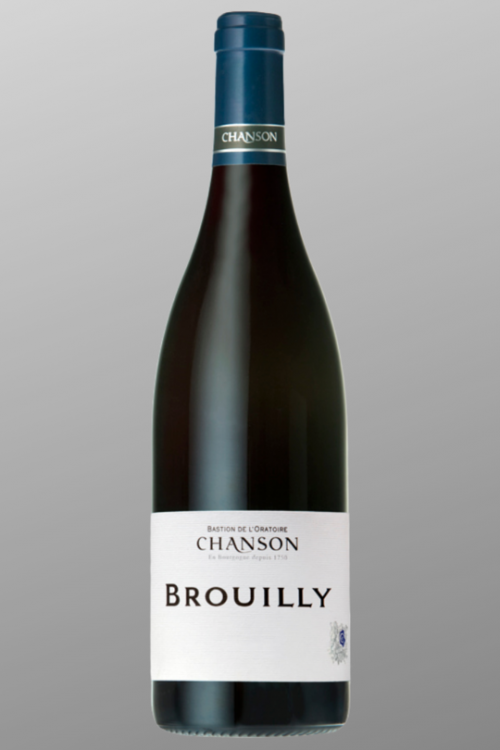 WHAT THE WINEMAKERS ARE SAYING “After a cold winter and a mild spring, the weather conditions in Summer were ideal with cold nights and warm days and enabled a perfect maturation of the grapes. The harvest took place mid-September under a bright sunshine. The red wines develop beautiful aromas of ripe red and black berries with a fleshy texture. Tasting offers intense aromas of ripe red berries mixed with spicy nuances. It is a well-structured and punchy wine with a refreshing aftertaste.”Maison Chanson OUR NOTES One of the great historic producers of Burgundy, founded in 1750 and purchased by the Champagne Bollinger family in 1999, Chanson today is one of only six producers in Burgundy still remaining from the 18th century and earlier. Chanson has been meticulously managed since 1999 to become one of Burgundy’s top estates. Domaine Chanson’s extensive holdings, and the extraordinary rigor and precision of their approach in the vineyards and cellars, result in wines of individuality and quality. Chanson owns 111 acres in Burgundy, 62 of which are in Beaune, including their monopole Clos des Fèves, and important holdings of Clos des Mouches and Corton Vergennes. They farm organically, harvest all grapes and vinify all wines, both for their estate holdings and contracted vineyards. TECHNICAL SHEET Color: Red Grape Variety: Gamay Soil: Granite Site: One of the most famous crus of the Beaujolais. The area of production covers the communes of Odenas, Saint-Lager, Quincié, Cercié, Charentay et Saint-Etienne-La-Varenne in the Rhône département. Food pairing: Cooked pork meat "charcuterie", barbecue and all sorts of mild cheeses.
 -
 WHAT THE WINEMAKERS ARE SAYING “Bright ruby colour with purple nuances. Intense and refreshing aromas of ripe berries (raspberries and cherries) mixed with liquorice. Complex and well-structured. Deep and tight texture. Well-integrated tannins. Long and refreshing aftertaste.” Domaine Chanson Père et Fils OUR NOTES Chanson is one of only six producers in Burgundy still remaining from the 18th century and earlier. The extraordinary rigor and precision of their approach in the vineyards and cellars, result in wines of individuality and quality. Chanson owns 111 acres in Burgundy, 62 of which are in Beaune, including their monopole Clos des Fèves, and important holdings of Clos des Mouches and Corton Vergennes. They farm organically, harvest all grapes and vinify all wines, both for their estate holdings and contracted vineyards. Once you have the opportunity to taste through their range, you will see the purity and complexity of their wines, ranging from their regional and village wines, to their greatest Grand Cru holdings. TECHNICAL SHEET From: France, Burgundy Grape Variety: Pinot Noir Soil: Clay-limestone Food pairing: Super "everyday" Burgundy, ideal with braised and roasted meats, as well as meat-sauced pastas.
 -
 WHAT THE WINEMAKERS ARE SAYING “The ample wine, dark ruby cherry-scented, with soft tannins comes from an alluvial soil called “les grands cras” south of the cru Morgon, an altitude of 250 meters. It is refined in bottles in the spring.” Jean Marc Burgaud OUR NOTES Jean-Marc Burgaud is based in Villie-Morgon, in the heart of the most celebrated of the crus. He began working here in 1989, when he had a hectare each in Beaujolais Villages, Regine and Morgon. Now he's got 17.5 hectares, with 4.5 ha in Beaujolais Villages, a hectare in Regnie, and the rest in Morgon, including a sizeable 8 hectares of Côte du Py. Burgaud’s wines are quite structured and yet they avoid being overpowering or too extracted. He works in quite a reductive way which sets up the wines nicely for some ageing. TECHNICAL SHEET From: France, Beaujolais, Beaujolais Village Color: Red Maturity: Old Sweetness: Dry Variety: Gamay Vineyard’s age: 60 years Vinification: maceration of the whole grapes for 10 days
 -
 WHAT THE WINEMAKERS ARE SAYING “Subtle garrigue notes accent black cherries in this medium to full-bodied wine that's round and supple on the palate and finishes silky and long." Joe Czerwinski, The Wine Advocate OUR NOTES In the 14th century, during their stay in Avignon, the popes built a papal castle in Châteauneuf-du-Pape. Impressed by the area's exceptional “terroir”, they planted vineyards around the castle on terraces covered with smooth rounded pebbles. Established in the northern part of Châteauneuf du Pape, the Jaume family has been dedicated to the art of wine growing since 1826. This venerable profession is their legacy, but above all it is their passion, requiring discipline, perseverance and a respect for nature and the challenges she presents them with. Their aim, as skilled wine growers, is to produce, carefully and lovingly, wines that are intense, rich and complex and that reflect and embody the wonderful terroir of the southern Rhône Valley. TECHNICAL SHEET Soil type: The Côtes du Rhône is made from various type of soils, but it mostly comes from limestone terraces with sand and red clay. This give to the “Reserve” an extraordinary richness and complexity with a mediteranean style. Grape variety: Grenache noir, Syrah, Cinsault, mourvèdre Winemaking & Ageing: Traditional wine making and ageing is performed in vats only. Bottling after 10-12 months.
 -
 WHAT THE WINEMAKERS ARE SAYING “Supple and fruity – two words easily sum up this lovely Coteaux du Giennois red wine. Enjoy when young and fresh, or in 3-4 years time when the aromas are even more developed. Villargeau red is ideal for relaxed eating occasions – perfect with a meat fondue or grilled meats.” Domaine de Villargeau OUR NOTES In 1991, the Thibault family decided to create the “Domaine de Villargeau” on land facing south-southwest and enjoying the greatest amount of sunshine. Two brothers, Fernand and Jean-François Thibault, cleared hillsides abandoned since the phylloxera crisis in order to plant vines. The story continues when, in 2000, they were joined by one of their sons, Marc, returning to the area armed with his apprenticeship and experience in viticulture and oenology. This 20 hectares vineyard is currently planted with ¾ white grapes, the Sauvignon Blanc. The red and rosé wines are generally made from Pinot Noir but the Gamay, the wine designation’s traditional grape variety, is used in the production of a delicious red wine. The diversity of the soils is due to the geological history behind the formation of the Ligerian depression: Firstly, the flint gives all of its potential to the Sauvignon which, in this area, has a very delicate, fruity expression. Secondly, the Kimmeridgian marl over limestone clay allows the Pinot Noir and Gamay to develop a good balance of body, fruitiness and freshness. TECHNICAL SHEET Grape variety: Pinot noir Soil: clay-limestone From: France, Loire-Valley, Coteaux du Giennois