-
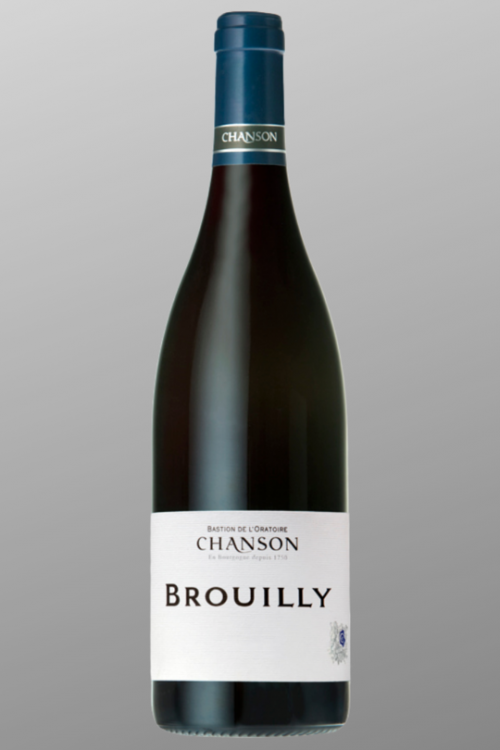 WHAT THE WINEMAKERS ARE SAYING “After a cold winter and a mild spring, the weather conditions in Summer were ideal with cold nights and warm days and enabled a perfect maturation of the grapes. The harvest took place mid-September under a bright sunshine. The red wines develop beautiful aromas of ripe red and black berries with a fleshy texture. Tasting offers intense aromas of ripe red berries mixed with spicy nuances. It is a well-structured and punchy wine with a refreshing aftertaste.”Maison Chanson OUR NOTES One of the great historic producers of Burgundy, founded in 1750 and purchased by the Champagne Bollinger family in 1999, Chanson today is one of only six producers in Burgundy still remaining from the 18th century and earlier. Chanson has been meticulously managed since 1999 to become one of Burgundy’s top estates. Domaine Chanson’s extensive holdings, and the extraordinary rigor and precision of their approach in the vineyards and cellars, result in wines of individuality and quality. Chanson owns 111 acres in Burgundy, 62 of which are in Beaune, including their monopole Clos des Fèves, and important holdings of Clos des Mouches and Corton Vergennes. They farm organically, harvest all grapes and vinify all wines, both for their estate holdings and contracted vineyards. TECHNICAL SHEET Color: Red Grape Variety: Gamay Soil: Granite Site: One of the most famous crus of the Beaujolais. The area of production covers the communes of Odenas, Saint-Lager, Quincié, Cercié, Charentay et Saint-Etienne-La-Varenne in the Rhône département. Food pairing: Cooked pork meat "charcuterie", barbecue and all sorts of mild cheeses.
 -
 WHAT THE WINEMAKERS ARE SAYING “Bright ruby colour with purple nuances. Intense and refreshing aromas of ripe berries (raspberries and cherries) mixed with liquorice. Complex and well-structured. Deep and tight texture. Well-integrated tannins. Long and refreshing aftertaste.” Domaine Chanson Père et Fils OUR NOTES One of the great historic producers of Burgundy, founded in 1750 and purchased by the Champagne Bollinger family in 1999, Chanson today is one of only six producers in Burgundy still remaining from the 18th century and earlier. Chanson has been meticulously managed since 1999 to become one of Burgundy’s top estates. Domaine Chanson’s extensive holdings, and the extraordinary rigor and precision of their approach in the vineyards and cellars, result in wines of individuality and quality. Chanson owns 111 acres in Burgundy, 62 of which are in Beaune, including their monopole Clos des Fèves, and important holdings of Clos des Mouches and Corton Vergennes. They farm organically, harvest all grapes and vinify all wines, both for their estate holdings and contracted vineyards. Requiring diligent viticulture and perfect ripeness, they vinify all whites and reds 100% whole cluster at their state of the art facility on the outskirts of Beaune. Aging takes place in the Bastion they own, one of the 5 massive towers from the 15th century fortifications that encircle the heart of medieval Beaune. Once you have the opportunity to taste through their range, you will see the purity and complexity of their wines, ranging from their regional and village wines, to their greatest Grand Cru holdings. TECHNICAL SHEET From: France, Burgundy Grape Variety: Pinot Noir Soil: Clay-limestone Food pairing: Super "everyday" Burgundy, ideal with braised and roasted meats, as well as meat-sauced pastas.
 -
 WHAT THE WINEMKARS ARE SAYING “Highly energetic, this wine’s radiance and impulsive red berry and rose petal aromas are instantly appealing. Ample and fresh on the palate, its flavors are also tasty and fruity, underscored by vibrant minerality, brought about by the schist-laden soils – the preferred terroir of great Grenache wines.” Mas Amiel OUR NOTES At once dashing and approachable, Vertigo is Mas Amiel’s youngest wine. It serves as an introduction before discovering the estate’s more complex and dense reds. It is made out of a blend of chiefly Grenache noir, combined with Syrah and Carignan, in view of obtaining distinct freshness. Vertigo always expresses youthful energy in an upfront and precise way. Mas Amiel is a large property – the biggest private cellar in Maury – located in the heart of the Agly valley, in France’s Roussillon region. This is Cathar country: it’s beautiful but rugged—a hot, rather hostile environment with rocky, stony soils, frequent windy weather, and 260 days’ sunshine a year. Back in 1816, a bishop used one of his plots of land as a bet in a game of cards. He lost it to Raymond Amiel, and this is how Mas Amiel was born. At the time, it only had 10 hectares of vines on it; it has grown substantially since then. TECHNICAL SHEET Parcels, terroir and vine-growing: Vertigo is elaborated from a selection of young parcels, on schist-laden slopes, facing North and South, and including remarkable deep limestone schist, specific to MAS AMIEL. The total production area represents a surface of 20 ha. Tilling is the only technique used to manage the soils. The vineyards produce an average yield of 25 hl/ha out of a plantation density of 4,000 vines/ha. Grape varieties: Vertigo is the expression of a subtle blend of local grape varieties. Grenache noir, Carignan and Syrah draw strength from the great variety of limestone schist terroirs. This wine also demonstrates the power of this terroir, expressed by the 5 to 20-year old vines. Harvest and winemaking: The harvest is 100% handpicked in 20-kg crates. The grapes are entirely de-stemmed. The parcels are made into wine, terroir by terroir, to highlight the specificity of each spot. The wine is made in 84-hl concrete vats with daily pumping over. Maturing: This product is blended in concrete vats for a period of 6 months. The choice of this surface is important as it allows Vertigo to fully express its fresh fruitiness. This wine is slightly filtered, but not fined. Production: 60,000 bottles 300 magnums
 -
 WHAT THE WINEMAKERS ARE SAYING “A powerful and elegant wine. A delight with red meat, game, duck and spicy dishes. Choice of old vines and terroirs with strong personality. Best decanted 2 hours before a meal, with stopper in place.”The Guibert Family OUR NOTES The Moulin de Gassac wines were created in the early 90s by the founder of Mas de Daumas Gassac, Aimé Guibert. Following the introduction of the vine pulling-up premium, Aimé began a partnership with the vine growers in this area with a view to saving its plots. The Moulin de Gassac Selection played a decisive role in preventing the disappearance of this terroir. Thereafter, Mas de Daumas Gassac confirmed the wines’ unique identity with their own signature: Moulin de Gassac. Produced from unique vineyards, with the help of Guibert family’s expertise, the Moulin de Gassac Selection reflects a shared desire to offer authentic wines. The Moulin de Gassac Selection is produced from the finest plots of a unique Languedoc terroir. A remarkable amphitheatre of vines facing the Mediterranean and the port of Sète, the hills of Villeveyrac are the source of these flavourful red wines, with a distinctly southern character. TECHNICAL SHEET Country / Region: France / Languedoc Terroir: Terroir de Villeveyrac Appellation: IGP Pays d’Hérault Colour: Deep ruby red Nose: Expressive, complex Palate: Red berries, powerful, round and warm tannin. Structured and balanced, with nice species. Soil Type: Lime sandstone and Rognacien marl slopes for Cabernet Sauvignon et Merlot. Terroir in front of Mediterranean sea. Grape varieties (~): 40% Cabernet sauvignon, 30% Merlot and 30% Syrah Vinification: Traditional maceration (around 20 days), at 25°C to 32°C. Regular pumping over. Maturing: 9 to 10 months in stainless steel vats. Yield (~): 40 - 45 hl/ha
 -
 OUR NOTES The 50-hectare Domaine des Roches Neuves is run by Bordelais Thierry Germain and is situated in the appellation of Saumur-Champigny in the Loire Valley. The winery has existed since 1850, and since purchasing the estate in 1991, Thierry has turned it into one of the finest in France. The estate is run strictly along biodynamic lines, harvesting is manual and yields are low. Vinification is carried out only in small batches and the wines are neither filtered not fined Tasting Notes Vintage 2018 A garnet-red with purple tints. On the nose, scents of violets, irises and stewed red fruits. On the palate, harmonious and balanced with a full-body. The finish is long with elegant and subtle tannins. TECHNICAL SHEET Grape: 100% Cabernet Franc From: France, Loire Valley, Saumur Champigny Age of the vines : 30 years Terroir: Chalky subsoil, sandy and clay-limestone soils Pairing: Rabbit and mushroom soup, roast leg of salt-marsh lamb or veal chops with baby onions and wild mushrooms, grilled red meats or stews.
 -
Out of stock
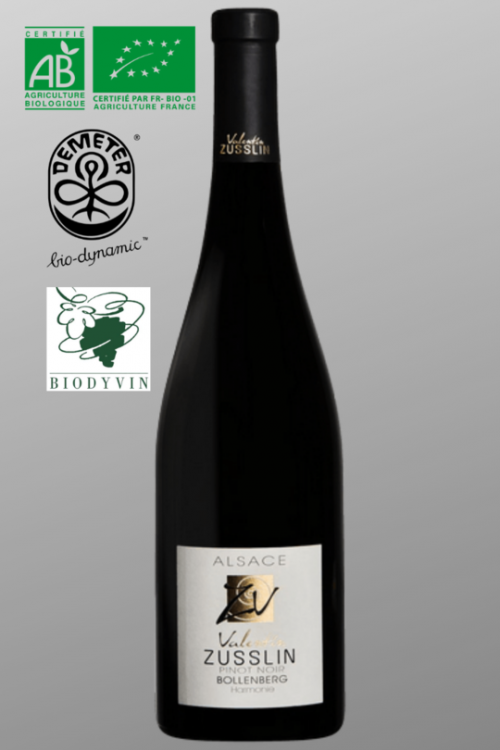 OUR NOTES Established in 1691 by M. Jodocus Cisle (former name of Zusslin), Domaine Valentin Zusslin is now run by two generations of the Zusslin family who are following in the footsteps of their forbears. The winery is based in Orschwihr, south of Colmar, and the vines are planted on the slopes of the Bollenberg, Clos Liebenberg and Grand Cru Pfingstberg. In 1997 the domaine converted to biodynamic viticulture. Much of the work in the vineyard and in the cellar is done by hand, in order that the grapes can express the full potential of the unique terroirs of the Domaine. TECHNICAL SHEET From: France, Alsace Colour: Red Maturity: Mature Sweetness: Dry Variety: Pinot Noir
 -
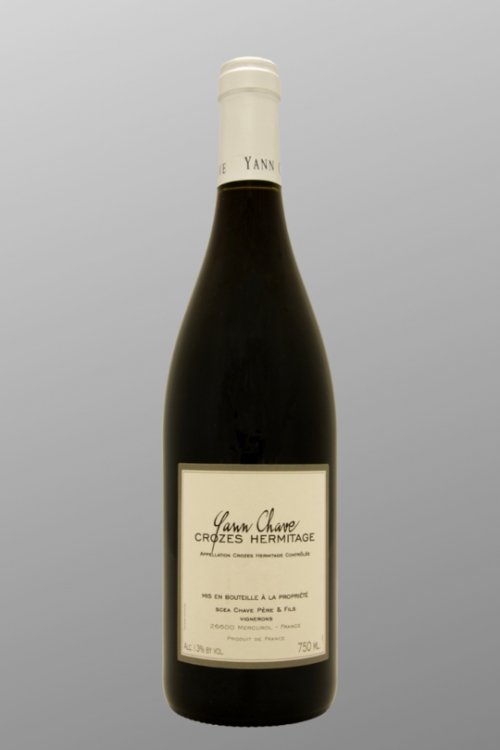 WHAT THE WINEMAKERS ARE SAYING “Located on the land of Beaume and Péléat, my Hermitage vines, dutifully and lovingly tended, are over 40 years old and are rooted in a soil of loess. South-West facing, the plots enjoy abundant sunshine throughout the vegetative cycle, thus providing grapes with the raw material I require to bottle the much sought-after DNA of this mythical Hermitage hillside.”Yann Chave OUR NOTES The adventure all began with Yann’s parents. They decided to settle in the area, on a four-hectare site, at the beginning of the 70s: one hectare of vineyards, and the rest, fruit orchards. They continued to extend the estate while maintaining the dual crop system, so common at the time. Their first harvests were sold to local merchants, and from 1973 onwards, they began to make their own wine before joining the Tain Cooperative Winery until 1978. The following year, Nicole and Bernard Chave created their own private winery. In 1996, Yann was 26 years old. With a postgraduate diploma in Auditing and Management Control, and free of military service obligations, he decided to work on the wine-growing part of the estate. With tender attachment to his vineyard, he restructured the vines and began to work on the soil. After being victim of poisoning by an insecticide he was using to treat the vines, he began seeking alternative solutions, engaging with organic agriculture at the dawn of the year 2000. The estate was certified in 2007. Today, located at the heart of Crozes-Hermitage appellation, the estate extends to 20 hectares, with 1.2 hectares on the mythical Hermitage hillside. Tasting notes Colour: bright colour, purple with a violet hue. Nose: discreet nose requiring aeration. Aromas develop with finesse and much complexity; blackberry jam, liquorice sticks, a hint of roasting and spice. Palate: full and generous on the palate. Mid-palate reveals rich aromas of ripe fruit and a hint of smokiness. Tannins are dense and intense, but with great finesse, giving the wine imposing structure and a long finish. A truly superb wine. Pairing: Roast duck breast fillet, creamy polenta, Grilled Mezenc rib steak with truffled mashed potatoes, Creamy Brillât Savarin or Chaource cheese. Maturing: Decant if to be drunk immediately. It may be laid down for 10 to 15 years. Many thanks to Christophe SANTOS, professor of wine waiting at the Hermitage Hotel School, and to his students. Vinification: After 100% destemming, vinification is as gentle as possible: gentle pressing is not performed, twice-daily pumping over is preferred, with vinification temperatures of under 28°C. After de-vatting, wine is placed in new and one-year-old demi-muids. Malolactic fermentation takes place in these barrels, and wine is kept here for 12 months. After this maturing phase, the wine will then spend 6 months in a vat to decant naturally prior to bottling.