-
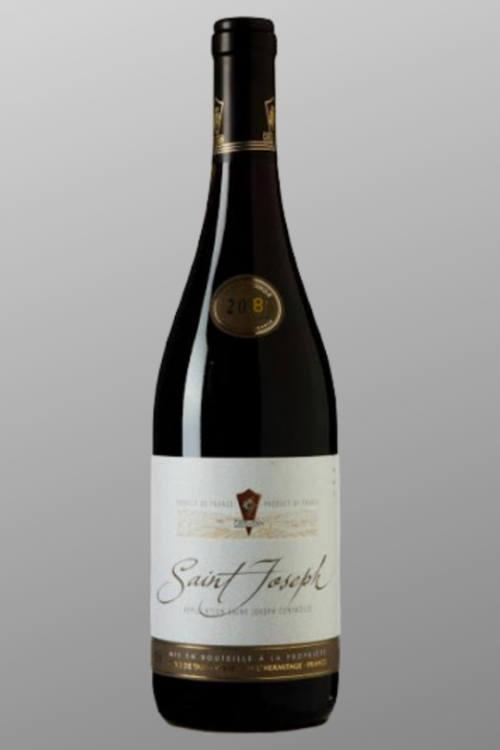 OUR NOTES At the foot of the famous Hermitage hillside, the Cave de Tain l'Hermitage cooperative produces five appellation contrôlée wines, namely Hermitage, Crozes-Hermitage, St-Joseph, Cornas and St-Péray. Cave de Tain also owns a 21-hectare domaine within the prestigious Hermitage appellation and the head winemaker, Xavier Frouin supervises each stage of vinification, from grape reception, classified according to quality, right up to bottling. The Cave has established an enviable reputation for authentic wines bearing the full character of their individual terroirs, bringing out the best through careful and non-intrusive vinification methods. As it has grown, traditional winemaking techniques have remained whilst benefitting from the latest developments in modern winemaking. Cave de Tain's new cellars were completed in late 2014; a total investment of €10m has dramatically reinvigorated winemaking facilities, increasing the Cave's quality potential without increasing production capacity. Speaking at the inauguration of the new cellars, Jancis Robinson said "Cave de Tain has always been managed with a true passion for the production of quality wines and extensive consumer insight. It is one of the best cooperative wineries in France, but also one of the best producers of northern Côtes-du-Rhône wines." TECHNICAL SHEET From: France, Rhône, Northern Rhône, Saint Joseph Color: Red Maturity: Early Sweetness: Dry Variety: Syrah
 -
Out of stock
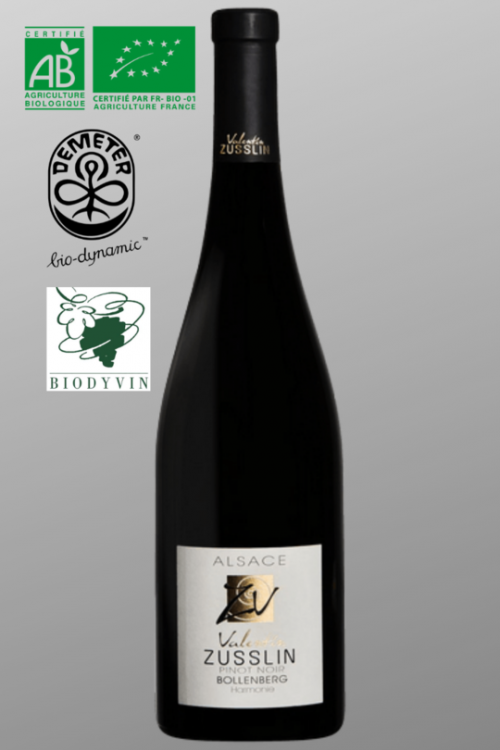 OUR NOTES Established in 1691 by M. Jodocus Cisle (former name of Zusslin), Domaine Valentin Zusslin is now run by two generations of the Zusslin family who are following in the footsteps of their forbears. The winery is based in Orschwihr, south of Colmar, and the vines are planted on the slopes of the Bollenberg, Clos Liebenberg and Grand Cru Pfingstberg. In 1997 the domaine converted to biodynamic viticulture. Much of the work in the vineyard and in the cellar is done by hand, in order that the grapes can express the full potential of the unique terroirs of the Domaine. TECHNICAL SHEET From: France, Alsace Colour: Red Maturity: Mature Sweetness: Dry Variety: Pinot Noir
 -
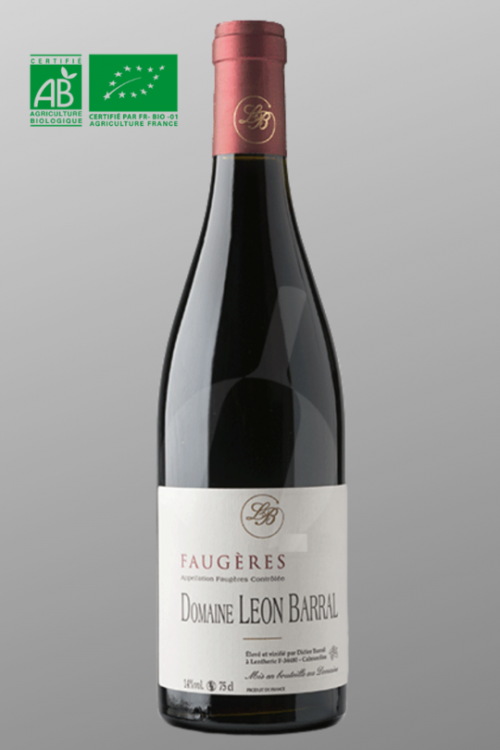 OUR NOTES Didier Barral represents the thirteenth generation to grow grapes in the tiny hamlet of Lenthéric, within the confines of the Faugères appellation deep in the heart of the Languedoc. Domaine Léon Barral is a beacon of revolutionary winegrowing: shortly after founding the domaine, Didier decided that biodynamic practices were the best choice for farming his thirty hectares of vineyards. Léon Barral has pioneered numerous innovative agronomic techniques with the goal of establishing his vineyards as a self-sustaining ecosystem. This Renaissance man, naturalist, and biodynamic maven commands tremendous respect among his peers for his visionary approach to topics like soil management, pest control, and drought mitigation in his vineyards. Incorporating biodynamic practices necessitates enormous investment and an uncompromising work ethic. With so much land to farm, it is fortunate that Didier has so much help. His workers of choice? A team of twenty cows, horses, and pigs that roam the vineyards during winter, grazing the cover crops while adding natural fertilizer to the soil. Without compacting the earth the way a tractor would, the animals effectively cultivate healthy microbial activity, bringing mushrooms, ants, ladybugs, earthworms, and other essential life forms, which add important nutrients while aerating the soil. This is the concept of sustainability at its finest, where the ecosystem thrives from the symbiotic relationships Didier has fostered amid the vines. TECHNICAL SHEET From: France, Languedoc-Roussillon, Faugeres Color: Red Maturity: Early Sweetness: Dry Variety: blend of 50% Carignan, 20% Cinsault and 30% Grenache
 -
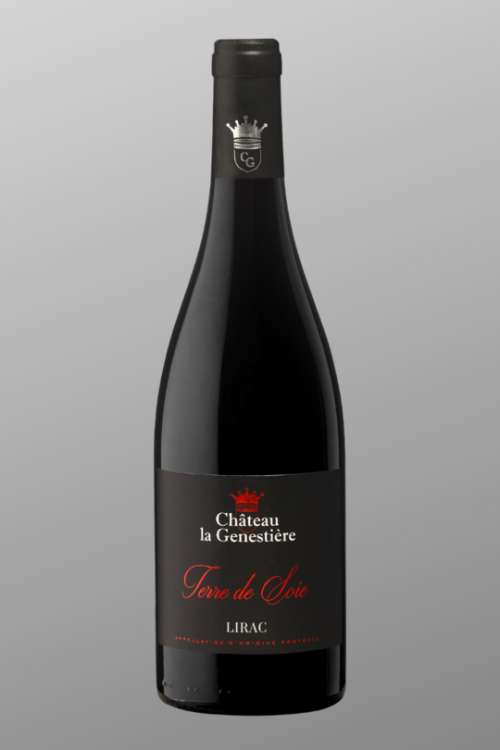 WHAT THE WINEMAKERS ARE SAYING “The color is deep red with purplish reflections; the purple disc marks the youth of this wine. On the nose, the first aromas are vanilla, roasted, cocoa and after aeration reveal notes of ripe fruit. On the palate, the attack is delicate with melted tannins and reveals aromas of cassis and crushed blackberries. The finish is peppery, spicy with a touch of vanilla with an exceptional length which suggests a great aging potential.” Chateau La Genestiere OUR NOTES Château la Genestière is the living memory of the history of Avignon. During the 16th century, the estate was a silk workshop. The basin, that used to feed the mill to weave silk, still exists today. Spanish broom was grown to produce silk. During the 18th century, no less than 15 000 people worked in the silk industry in Avignon, France being in those days the world’s leading silk exporter. Wine production at la Genestière only began in 1930, after the decline of the silk industry. In 1994 Jean-Claude and Raphaël Garcin purchased the estate, which already had a great reputation in France and abroad. Throughout the years, with lots of work, perseverance and skill, they grew the estate by adding Domaines Saint-Anthelme, Les Ramières and Longval, to cover the greatest areas of the Southern Rhône: Tavel, Châteauneuf du Pape, Lirac and Côtes du Rhône. In 2015 Christian Latouche, who already owned two estates in the Baux de Provence, purchased the property to keep this fascinating story going. TECHNICAL SHEET Grape varieties: Grenache (50%), Syrah (30%), Mourvèdre (20%) Terroir: Limestone clay with spreading rolled pebbles. The terroir is sunny and swept by the mistral. Yield: 40 hectoliters per hectare. Vinification: Vinification with punching down and temperature control over a long vatting period. After selecting the best vintages by tasting, the final blend is aged in new barrels for one year. Food & Wine Pairing: It is served with game, wild boar, hare stew. Aging potential: Drink between 5 and 10 years and more.
 -
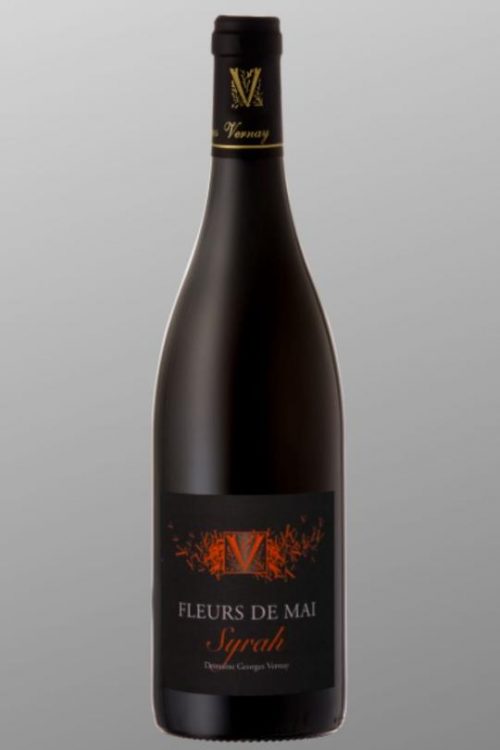 WHAT THE CRITICS ARE SAYINGWine Person of the Year 2012: Christine Vernay. Producer of exceptional wines, the absolute pinnacle of quality in France and in the world. Bettane and Desseauve, Le Grand Guide des Vins de France 2012 This cuvée comes from mature Syrah vines and offers a degustation very close to that of a Côte-Rôtie. It derives its name “Fleurs de Mai” ‘May Flowers’ from the May Flower peach trees that were long ago found planted on the plot. A wine of deep fragrances, those of black cherries and pepper, game and spices all wrapped around a supple texture. Ripe, fresh and persistant, it is remarkably well balancedwine produced in small, limited quantities.OUR NOTESFar removed from the plump, languid Viogniers from less unique terroirs, Domaine Georges Vernay’s three Condrieu, remain quite unlike any other wine produced in the world. Made from tiny yields on incredibly steep granite terraces, they are not cheap, but then nor should they be. They come from one of the most challenging – and expensive to manage – vineyard areas in the world, and they are benchmark examples. In the firmament of great white wine, these are counted amongst the very best. Befitting the civility and studious nature of this Domaine, it is appropriate that their measured evolution from a great grower in the Northern Rhône into one of the greatest growers in France has been understated. At Domaine Georges Vernay, authenticity comes in the form of old vines, low yields and the mantra of ‘minimal intervention’. We could fill pages with the recent critical success that winemaker Christine Vernay and her wines have achieved over the past few years. This is actually quite scary considering that even a few years back it didn’t seem possible for their wines to get much better. And yet, that is exactly what has happened. Christine Vernay’s received the “Wine Person of the Year 2012” award from the two leading French wine critics, Michel Bettane and Thierry Desseauve. In their new guide, 2012 Le Grand Guide des Vins de France, Vernay was elevated to the top “5 Star” rating. Vernay joins a clique of only 30 French Estates - that includes Domaine de la Romanee Conti, Ausone, Latour, Margaux, Lafite Rothschild and Yquem. It’s also worth noting that Vernay probably is the most artisanal of these and is also one of the few family-owned Domaines in this class. It’s an incredible achievement, yet for those insiders familiar with the wines, it’s an achievement that will not surprise. There are two prestigious Condrieu cuvees, Côteau de Vernon and Les Chaillées de l’Enfer. The ‘normal’ cuvée is known as “Les Terrasses de l’Empire”. Today, the two Côte Rôties produced - la Blonde du Seigneur and Maison Rouge - are also regarded as some of the finest in the region. There is some great value to be had from the le Pied de Samson Viognier and the Georges Vernay Syrah.TECHNICAL SHEETCountry: France Region: Rhone Valley Appellation: IGP Collines Rhodaniennes Producer: Christine Vernay Grape: 100% Syrah Age of the vines: 50 years Vineyard: Mature vines planted on the plateau adjacent to the Condrieu appellation Aging: 8 months in oak vats Total Production: 6,000 bottles
 -
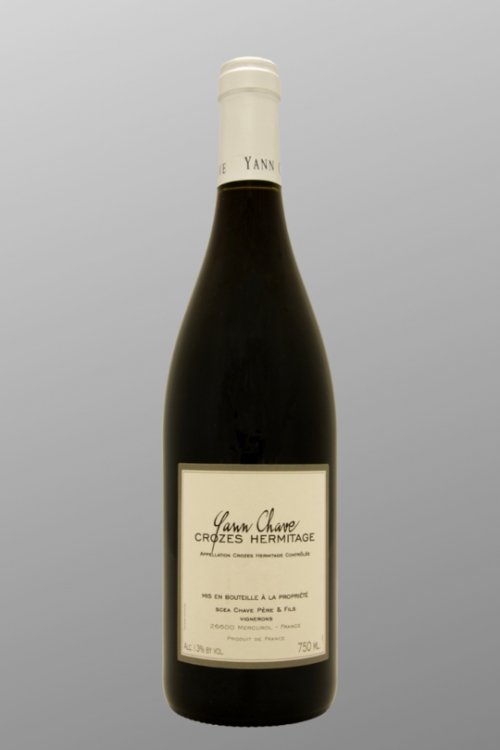 WHAT THE WINEMAKERS ARE SAYING “Located on the land of Beaume and Péléat, my Hermitage vines, dutifully and lovingly tended, are over 40 years old and are rooted in a soil of loess. South-West facing, the plots enjoy abundant sunshine throughout the vegetative cycle, thus providing grapes with the raw material I require to bottle the much sought-after DNA of this mythical Hermitage hillside.”Yann Chave OUR NOTES The adventure all began with Yann’s parents. They decided to settle in the area, on a four-hectare site, at the beginning of the 70s: one hectare of vineyards, and the rest, fruit orchards. They continued to extend the estate while maintaining the dual crop system, so common at the time. Their first harvests were sold to local merchants, and from 1973 onwards, they began to make their own wine before joining the Tain Cooperative Winery until 1978. The following year, Nicole and Bernard Chave created their own private winery. In 1996, Yann was 26 years old. With a postgraduate diploma in Auditing and Management Control, and free of military service obligations, he decided to work on the wine-growing part of the estate. With tender attachment to his vineyard, he restructured the vines and began to work on the soil. After being victim of poisoning by an insecticide he was using to treat the vines, he began seeking alternative solutions, engaging with organic agriculture at the dawn of the year 2000. The estate was certified in 2007. Today, located at the heart of Crozes-Hermitage appellation, the estate extends to 20 hectares, with 1.2 hectares on the mythical Hermitage hillside. Tasting notes Colour: bright colour, purple with a violet hue. Nose: discreet nose requiring aeration. Aromas develop with finesse and much complexity; blackberry jam, liquorice sticks, a hint of roasting and spice. Palate: full and generous on the palate. Mid-palate reveals rich aromas of ripe fruit and a hint of smokiness. Tannins are dense and intense, but with great finesse, giving the wine imposing structure and a long finish. A truly superb wine. Pairing: Roast duck breast fillet, creamy polenta, Grilled Mezenc rib steak with truffled mashed potatoes, Creamy Brillât Savarin or Chaource cheese. Maturing: Decant if to be drunk immediately. It may be laid down for 10 to 15 years. Many thanks to Christophe SANTOS, professor of wine waiting at the Hermitage Hotel School, and to his students. Vinification: After 100% destemming, vinification is as gentle as possible: gentle pressing is not performed, twice-daily pumping over is preferred, with vinification temperatures of under 28°C. After de-vatting, wine is placed in new and one-year-old demi-muids. Malolactic fermentation takes place in these barrels, and wine is kept here for 12 months. After this maturing phase, the wine will then spend 6 months in a vat to decant naturally prior to bottling.
 -
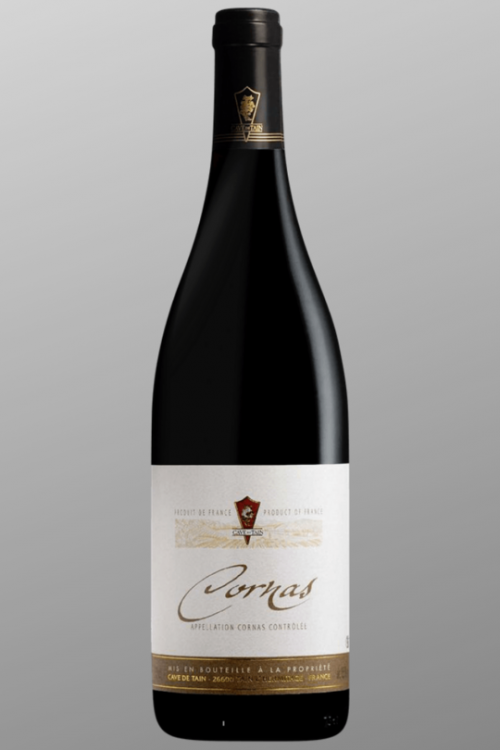 WHAT THE CRITICS ARE SAYING "The medium to full-bodied 2016 Cornas Grand Classique is supple, plush and easy to drink. Plum, cola and spice notes appear on the nose and persist across the palate onto the soft, open-knit finish." Joe Czerwinski, The Wine Advocate OUR NOTES At the foot of the famous Hermitage hillside, the Cave de Tain l'Hermitage cooperative produces five appellation controlee wines, namely Hermitage, Crozes-Hermitage, St-Joseph, Cornas and St-Péray. Cave de Tain also owns a 21-hectare domaine within the prestigious Hermitage appellation. The Cave has established an enviable reputation for authentic wines bearing the full character of their individual terroirs, bringing out the best through careful and non-intrusive vinification methods. Speaking at the inauguration of the new cellars, Jancis Robinson said "Cave de Tain has always been managed with a true passion for the production of quality wines and extensive consumer insight. It is one of the best cooperative wineries in France, but also one of the best producers of northern Côtes-du-Rhône wines." TECHNICAL SHEET From: France, Northern Rhone, Cornas Colour: Red Maturity: Early Variety: Syrah